Understanding Your Options
Search for door security devices and you’ll find no shortage of choice. Deadbolts, security chains, door bars, smart locks, electronic access systems, floor-anchored reinforcement. Each promises to keep a door secure, but they’re not solving the same problem, and understanding the difference matters before you decide where to invest.
Most door security devices fall into one of two categories. Some control who can get through the door under normal conditions. Others are built to resist a door being forced open when someone’s trying to get through regardless. Confusing the two is where a lot of security decisions go wrong, a strong lock at handle height won’t help much if the door itself gives way at the frame.
The Main Types Of Door Security Devices
Standard locks and deadbolts
Control everyday access and are the baseline on almost every door. They’re effective at keeping a door shut under normal use, but under forced impact, the weak point usually isn’t the lock itself. It’s the strike plate and frame around it.
Security chains
Security chains offer a visual barrier and let you open a door partway to identify a visitor, but they’re rarely built to withstand sustained force. Most are fitted with short screws into a thin section of frame, which limits how much pressure they can actually resist.
Door bars and wedges
These are a low-cost, portable option that brace the door from floor to handle or frame. They can add resistance, but many aren’t fixed in place, which means their effectiveness depends on exact positioning and can vary from one use to the next.
Smart locks and electronic access systems
These systems are built for convenience and access control, remote locking, activity logs, keyless entry, and they’re genuinely useful for managing who comes and goes. But they’re still working through the same lock cylinder and frame as a standard lock, so they don’t change how much force a door can withstand if someone tries to force it.
Floor-anchored reinforcement devices
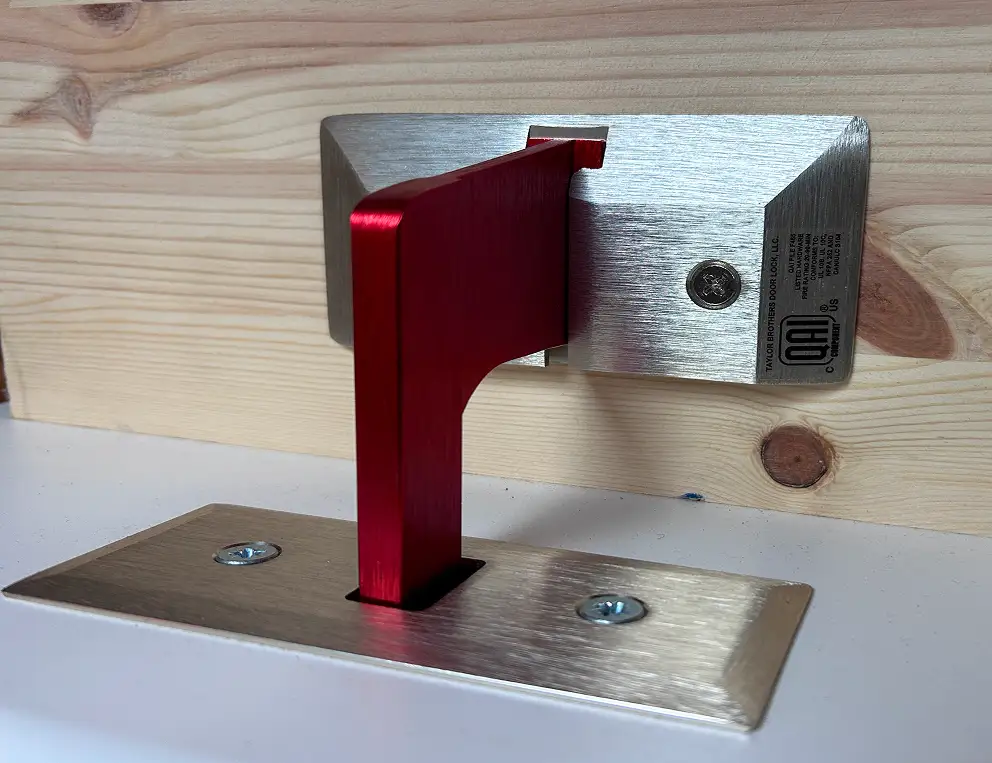
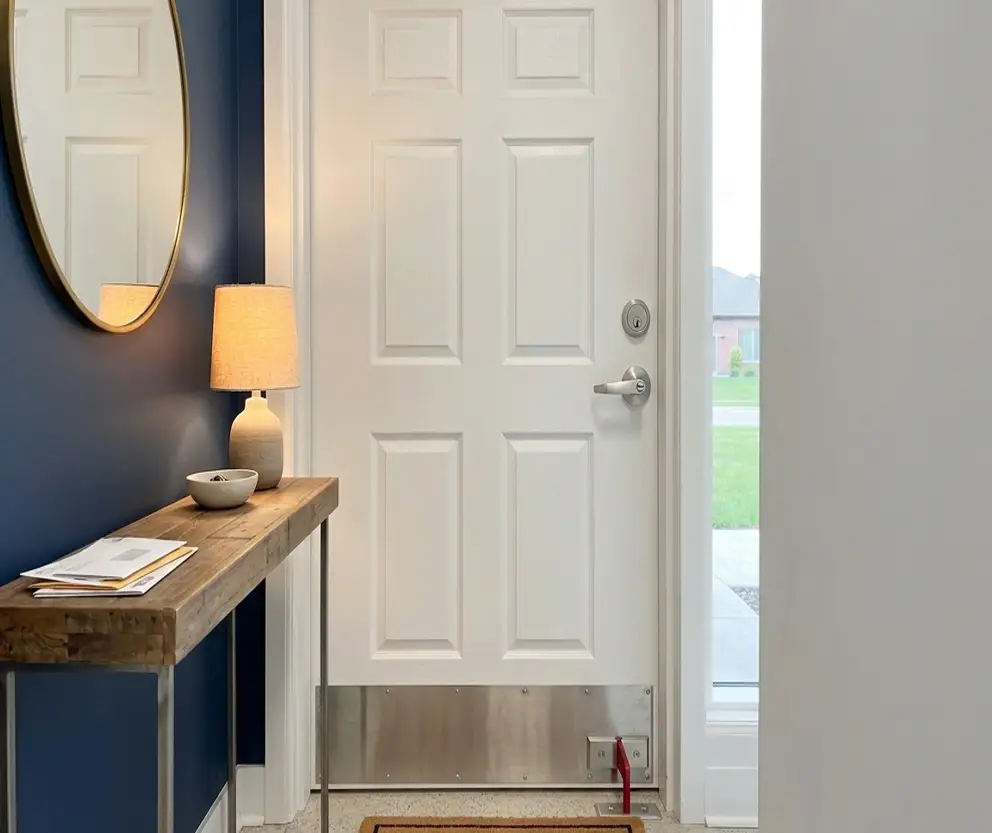
This is the category that Nightlock sits in and take a different approach entirely. Rather than reinforcing the lock, they reinforce the base of the door itself, anchoring it into the structural floor. This addresses the point where forced entry most often succeeds, rather than the point most devices are designed around.
Nightlock isn't a replacement for your existing lock, chain, or access system
It is designed to work alongside them. Most door security devices concentrate their strength at handle height, which means a determined forced entry attempt is often met with a single point of resistance. Nightlock adds a second, independent point at the base of the door, so an attempt has to overcome two separate barriers rather than one.
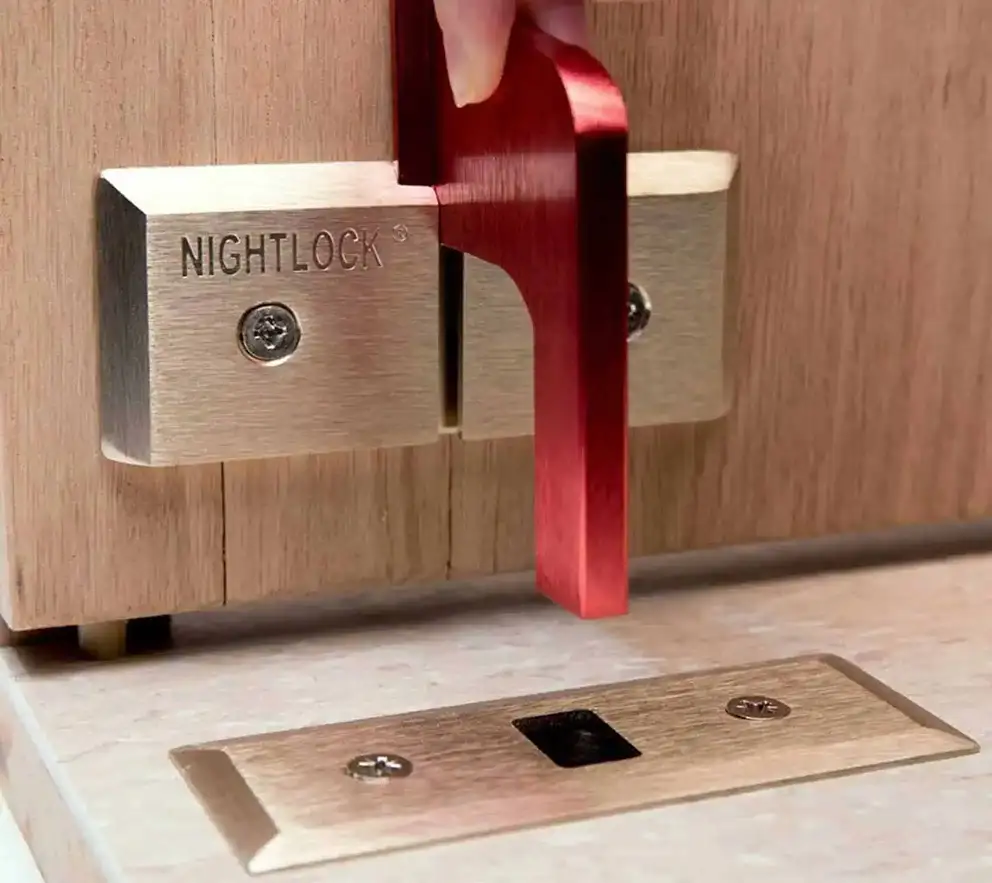
It’s also mechanical rather than electronic. Smart locks and access systems bring real benefits for managing everyday access, but they depend on power, software and maintenance to keep working. Nightlock has none of that to rely on. It’s engaged and disengaged manually, so it performs the same way whether it’s day one or year ten.
What To Look For In A Door Security Device
When comparing options, it’s worth asking a few direct questions:
- Does it reinforce the lock, or does it reinforce the door itself?
- Does it rely on power, software, or a connection to keep working?
- Can it be engaged quickly, under pressure, without training?
- Does it work alongside what you already have, or does it mean replacing it?
Devices that answer these questions differently aren’t necessarily competing with each other. A smart lock and a floor-anchored device solve different problems, and for many homes, schools and businesses, the strongest setup combines more than one type rather than relying on a single device to do everything.
A Layered Approach Works Best
No single device covers every scenario and treating door security as one product to choose rather than a system to build is a common mistake. Access control manages who comes and goes. A well-fitted lock secures the door day to day. Reinforcement like Nightlock adds resistance for the moments when a door is put under real pressure. Together, they cover far more ground than any one measure on its own.
If you’re reviewing door security devices for a home, school, or commercial premises and want to understand where reinforcement fits alongside what you already have, contact Nightlock today.
Speak To Nightlock
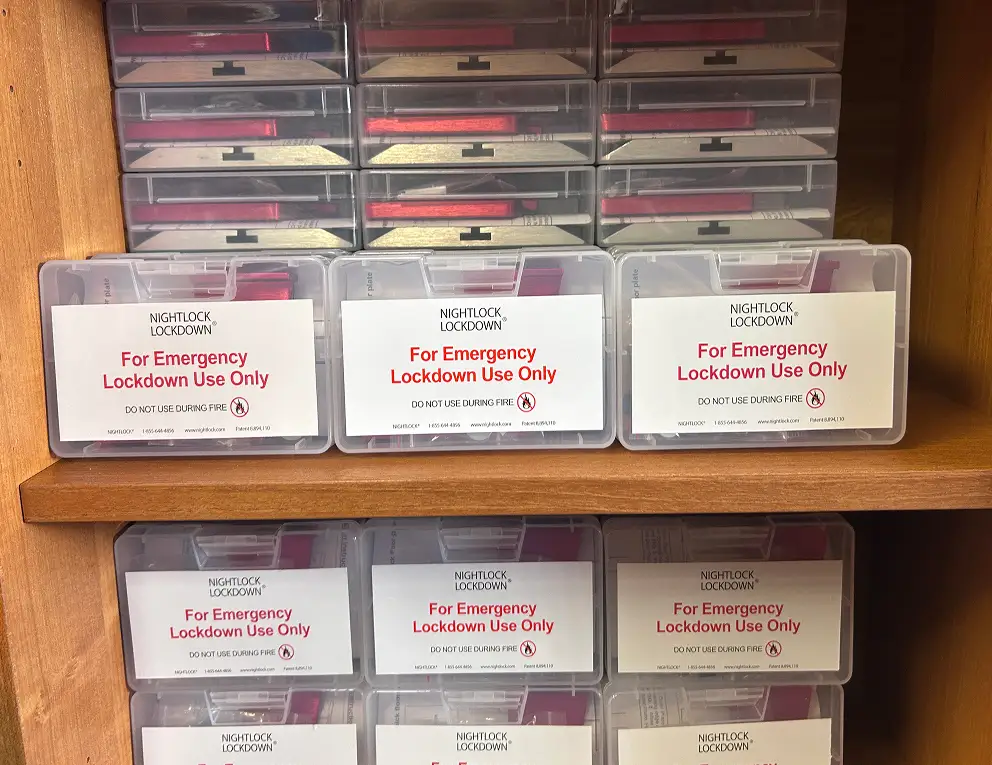
If you would like to discuss how this could work for your school, bulk supply for multiple classrooms or compatibility with your existing school lock setup, contact us today.
Frequently Asked Questions
What is Nightlock?
Nightlock is a floor mounted door security device designed to reinforce inward opening doors. It anchors into the structural floor and creates a physical barrier at the base of the door when engaged. It works alongside your existing lock to provide an additional layer of internal door security.
How quickly can it be deployed?
Nightlock is manually operated from inside the room. Once installed, it can be engaged quickly when required by placing the device into the fitted floor plate and positioning it against the door.
Is Nightlock suitable for inward and outward opening doors?
Nightlock is designed primarily for inward opening doors. Suitability for outward opening doors depends on configuration and application. If you are unsure about compatibility with your specific doors, contact Nightlock UK before ordering.
Does Nightlock replace existing locks?
No. Nightlock does not replace your primary lock. It complements your existing door hardware by adding a separate reinforcement point at floor level. Your standard locking system continues to manage everyday access control.
Can Nightlock be used in schools and commercial buildings?
Yes. Nightlock is commonly considered for classrooms, offices, meeting rooms and other internal spaces where additional door reinforcement may support safeguarding or security planning. It may form part of a wider layered approach in response to Protect Duty considerations.
Do you offer installation services for Nightlock?
We only supply the product. Installation is designed to be straightforward and manufacturer instructions are provided with each unit. If you have questions about suitability before purchasing, we are happy to provide guidance.
Protect the People Who Matter Most
Whether you’re protecting a single classroom or securing an entire campus, Nightlock helps you create safer spaces with confidence.